
Rent anything with MyRent
Year
2019
My Role
Founding Designer
Type
C2C Mobile App
Summary
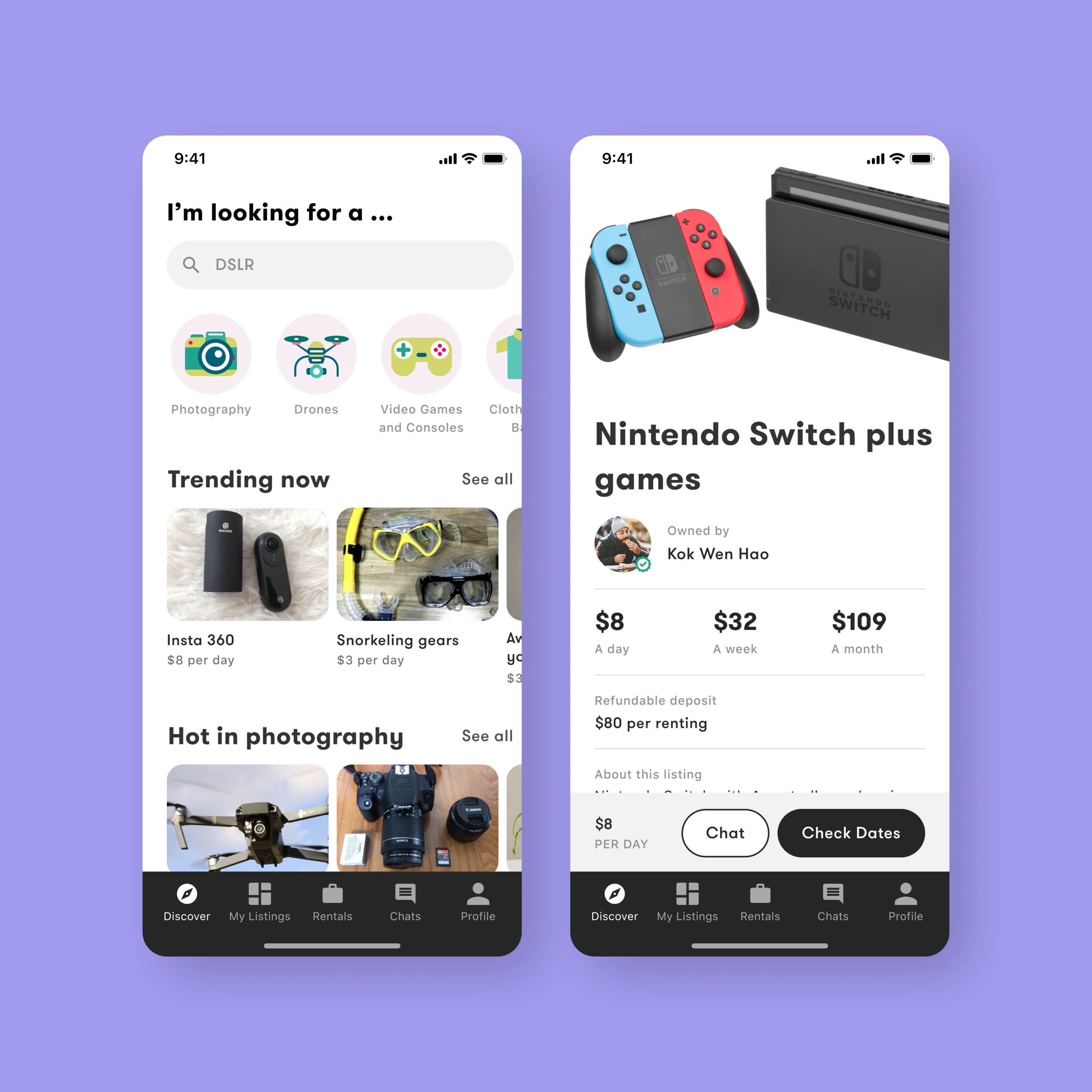
As the founding designer of MyRent, I helped a team of six build a fully insured, mobile-first marketplace to solve the high cost of owning niche gear. Many people buy expensive items like professional cameras for one-time use, but they have no secure way to rent them out to others. MyRent bridges this gap by turning these idle assets into shared opportunities, making it easy and safe for anyone to rent anything
Since our launch in December 2018, we have seen steady growth in our community and marketplace (as of mid-March 2021):
7,600+ Registered Users:
Building a trusted community of renters and owners
1,800+ Listings:
Offering a wide variety of items for different experiences
1,200+ Offers Made:
Proving the high demand for a secure, peer-to-peer rental platform
The Challenge | The High Cost of Ownership
We noticed that more people are buying items they only need temporarily, like specialized travel gear or sports cameras. However, the actual cost per use is often very high—for example, a $500 camera used for just two diving trips a year is a significant investment for very little active time.
Without a dedicated rental platform, owners often try to get their money back by selling their gear on sites like Craigslist or Carousell after only a few uses. This cycle happens because there hasn't been a secure, easy-to-use infrastructure designed specifically to facilitate short-term rentals.
The Solution | A P2P Rental Platform
To address these challenges, we built a insured, mobile-first, P2P rental platform that allows people to safely rent out almost anything.
How it works for an owner
List an item on MyRent is simple. Snap a pic, set a price and add a few lines for it. You will be done in just a couple of minutes. Once your item is up, wait for the offers from renters coming in and accept the ones where the time and price work for you.
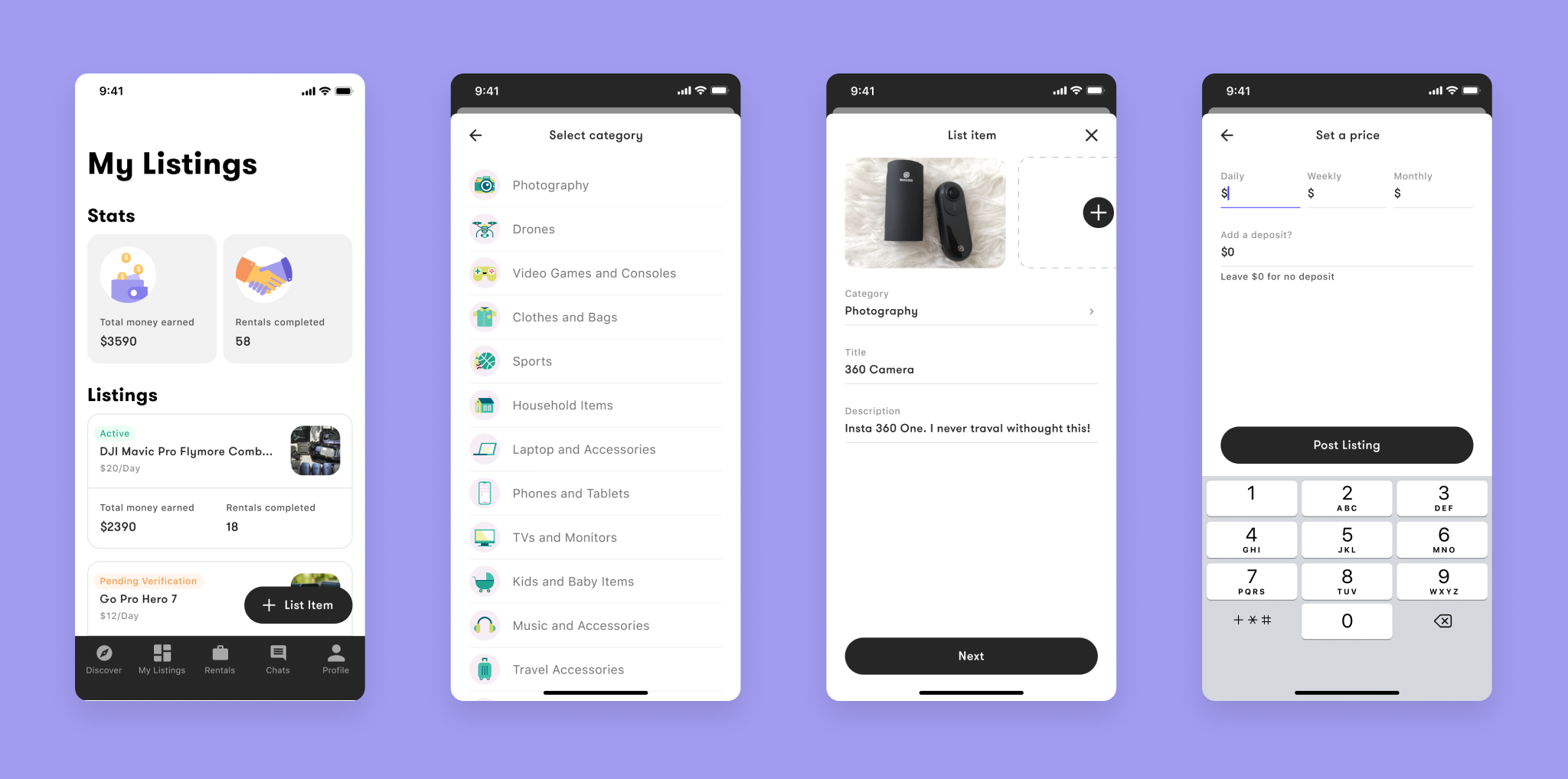
Steps for owners to list their item on MyRent
How it works for a renter
Finding the right item on MyRent is just as straightforward. Renters can browse curated listings on the Discover page or use search and filters to narrow down exactly what they need. After selecting rental dates, they can message the owner directly through in-app chat to confirm availability, discuss meetup details, and align on any special requests—all before placing an offer with confidence.
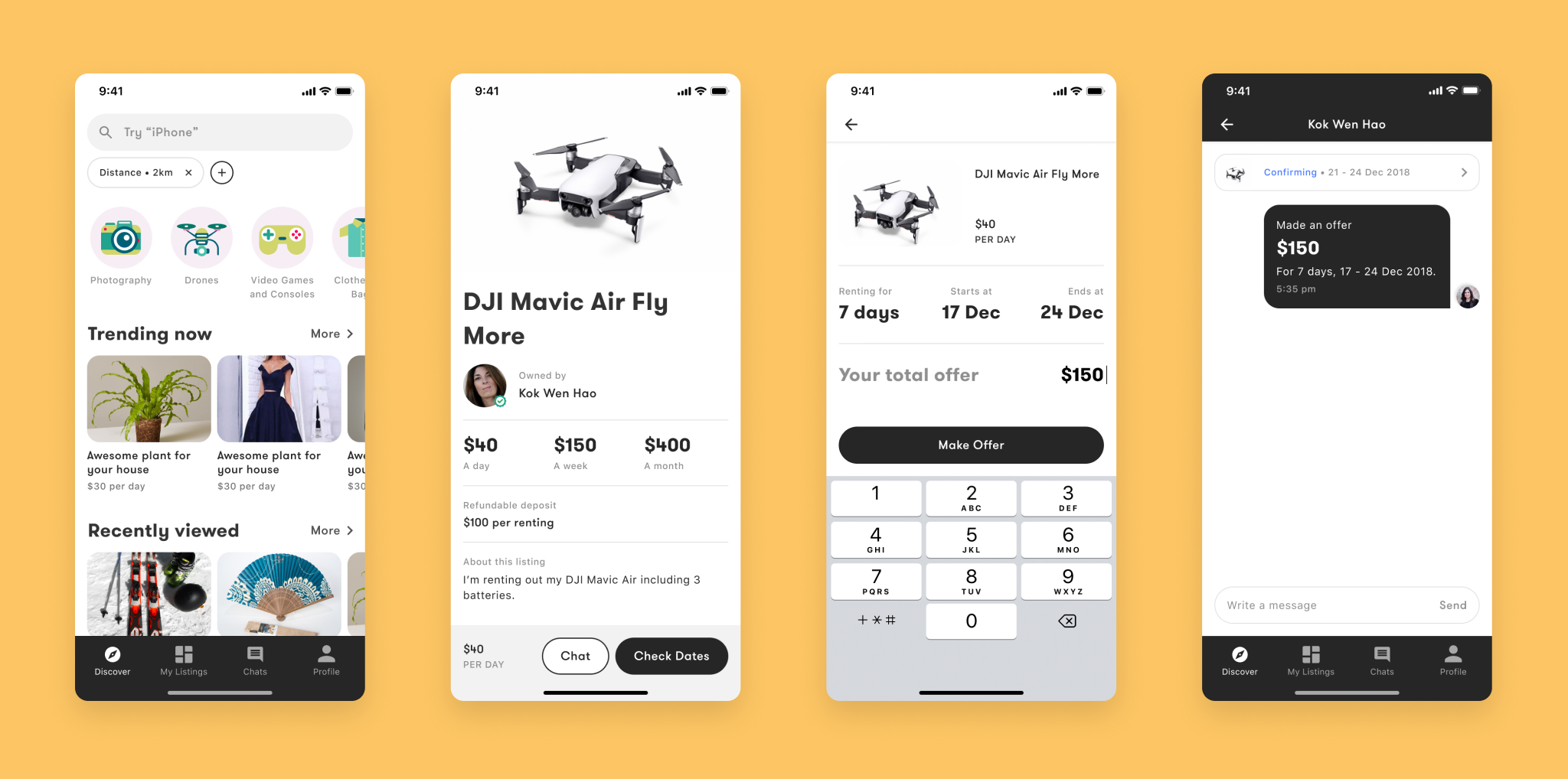
Steps for renters to send out an offer
Key UX Decisions | Not just any renting platform
Designing the rental experience is not just about find and book an item. The bigger challenge was addressing the emotional friction behind peer-to-peer rentals—trust, risk, and uncertainty—especially when high‑value items are involved.
The following UX decisions were made to reduce hesitation and help users feel confident at every step of the journey.
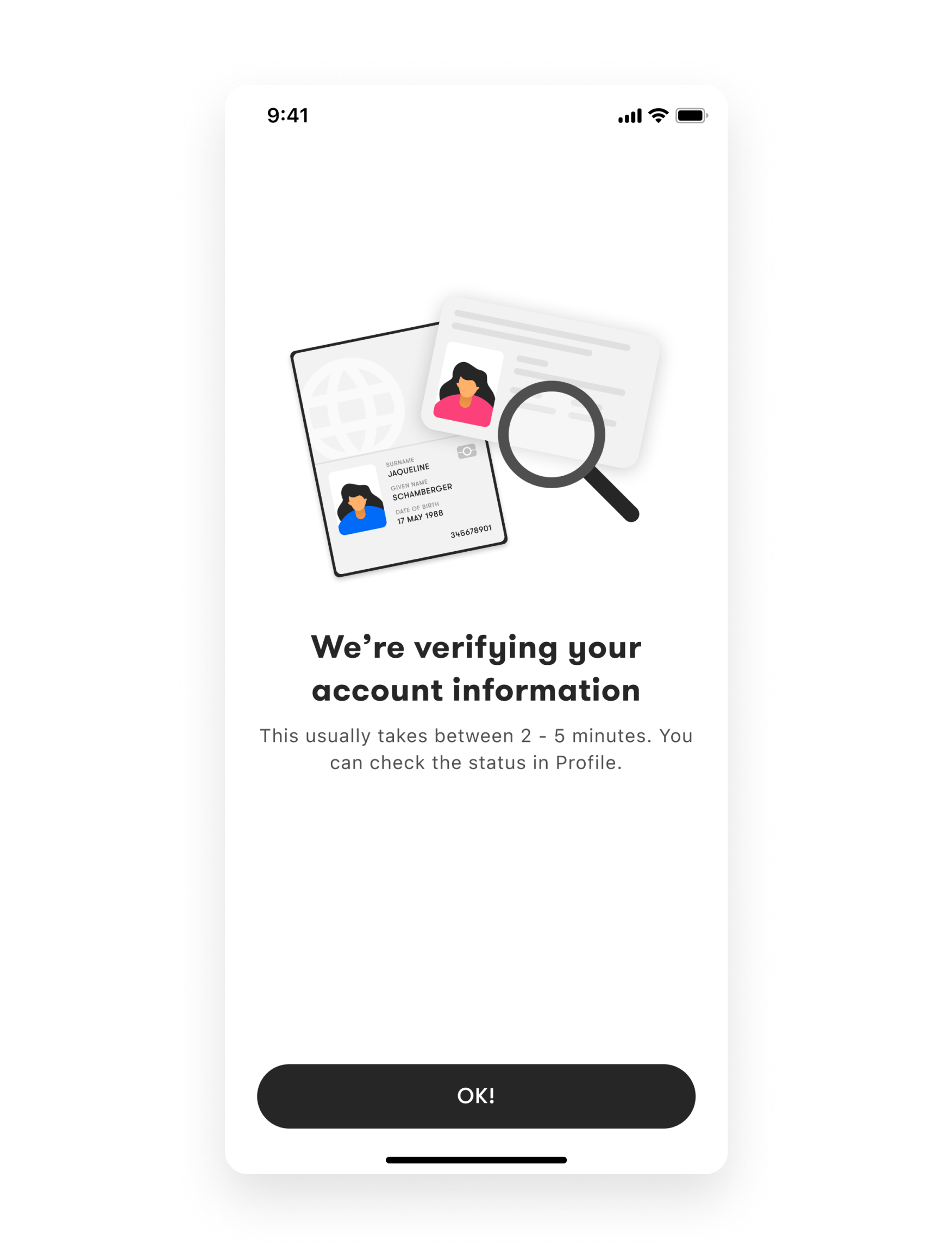
Designing for safety as a baseline, not a feature
People need to trust who they are renting from before they commit. I designed identity verification as a fast, mobile‑first flow that takes 2–5 minutes and clearly shows verification status in the user profile. This builds trust without slowing down the rental flow.

Reducing owner risk to unlock supply
Many owners hesitated to list items because they worried about damage or loss. As a team, we created the Lender Protection Guarantee (LPG) to reduce this risk, covering damages up to S$1,000 and supporting optional deposits. This approach helped increase owner confidence and encouraged more listings to enter the marketplace.
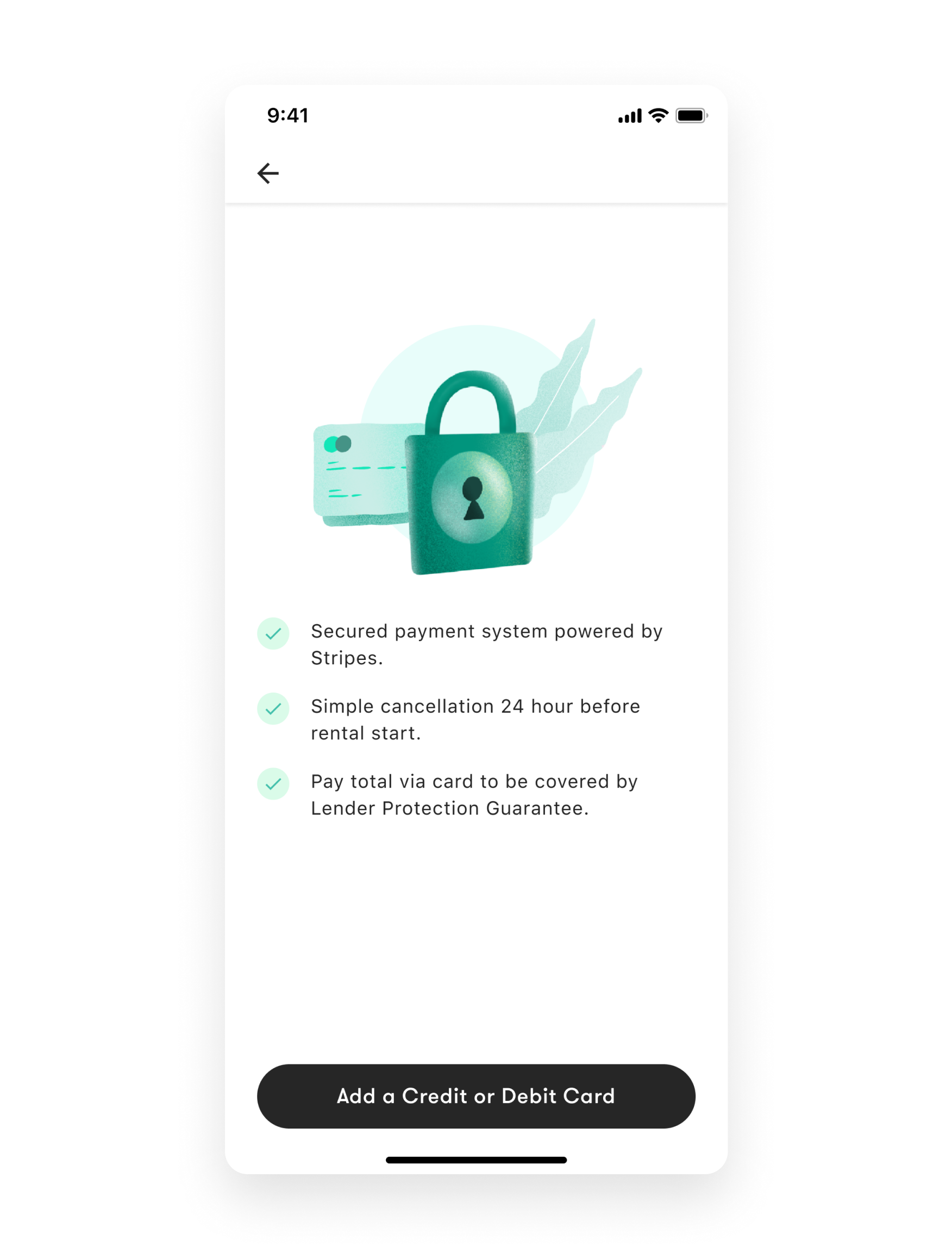
Making payments reassuring
Payments are designed to be clear and predictable at the moment of commitment. We show users what is protected, how cancellation works, and what they will be charged. By encouraging card payments, we ensure traceability, enable protection guarantees, and keep both renters and owners safe.
Process | Designing in an Early-Stage Marketplace
As an early-stage team, our process was fast, informal, and highly collaborative. We didn’t follow a rigid framework—instead, we focused on staying close to real user problems and making decisions quickly.
Rapid alignment through sketches and conversation
Design discussions often started with rough sketches rather than polished mockups. We shared customer feedback openly and used sketches to align on what problem we were solving, explore multiple directions, and decide what to prioritise next. This lightweight approach helped us move forward without over-investing too early, especially when requirements were still evolving.
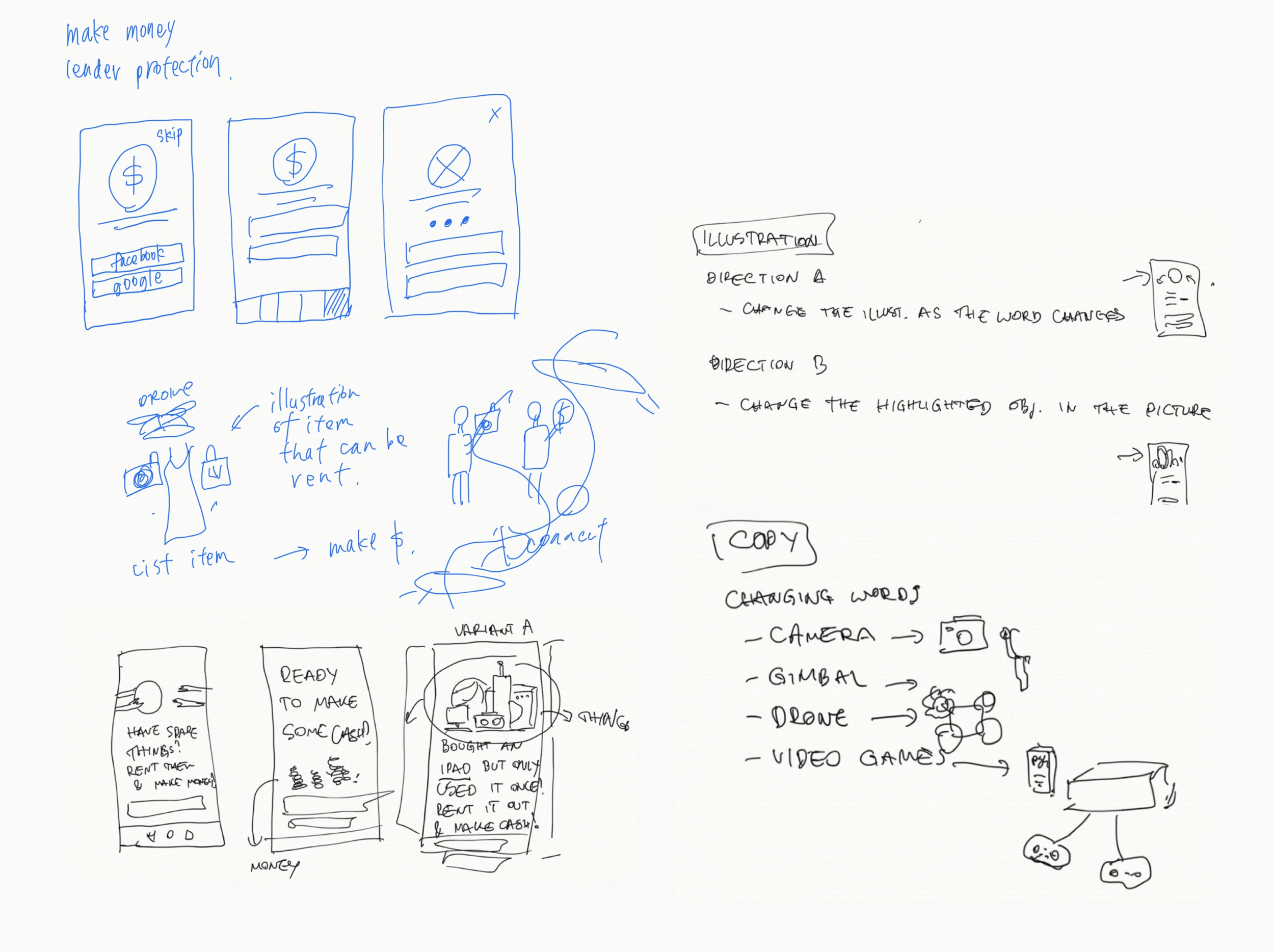
Sketches during the discussion for mobile app landing page improvement
Learning by doing—and meeting users where they are
With a small team and limited resources, we treated real usage as a core research method. We rented from others on MyRent, and attended offline events to speak directly with potential users. These first-hand experiences helped us uncover friction that wouldn’t surface in interviews alone—such as trust concerns, handoff logistics, and unspoken expectations—and fed directly back into product and design decisions.
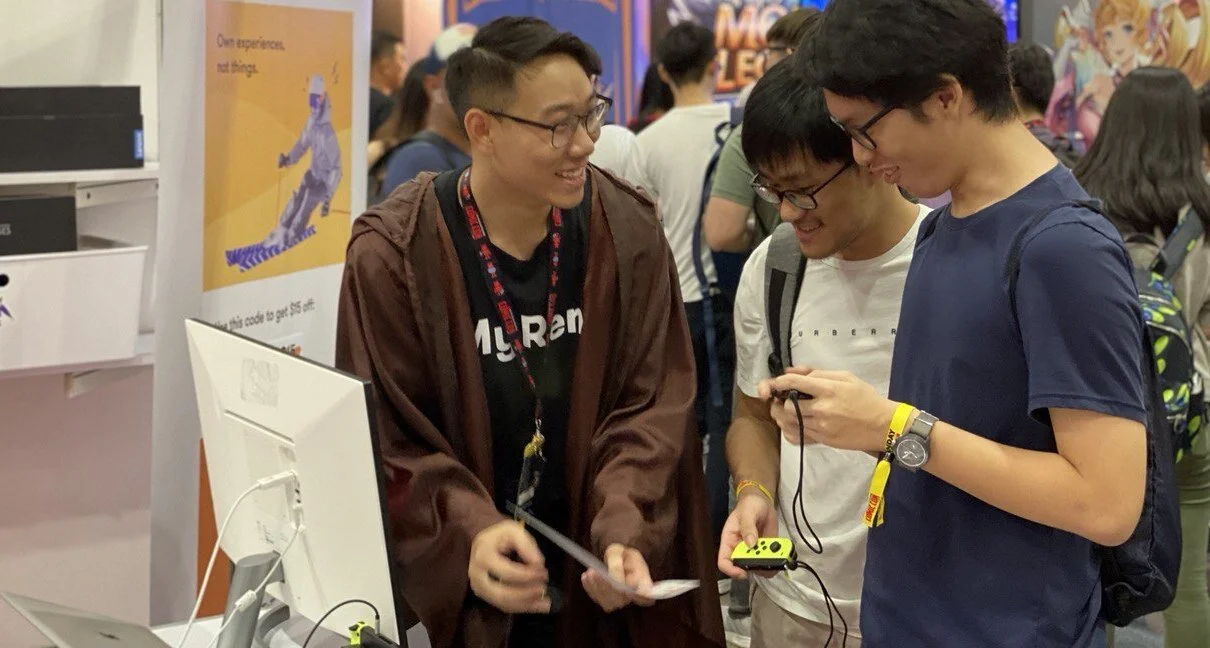
Our team member interacting with potential customers in an offline event
Customer Testimonials
Direct feedback from customers using MyRent in real rental scenarios.
Reflecting on the MyRent Journey
MyRent was an important part of my growth as a founding designer, where I worked with a team of six to build a trust‑driven marketplace from the ground up. It pushed me to design across product, policy, and experience in a highly ambiguous, early‑stage environment.
The experience of scaling MyRent to over 7,600 users taught me the importance of lean, iterative design. These lessons continue to shape how I approach building thoughtful, user‑centered products today.